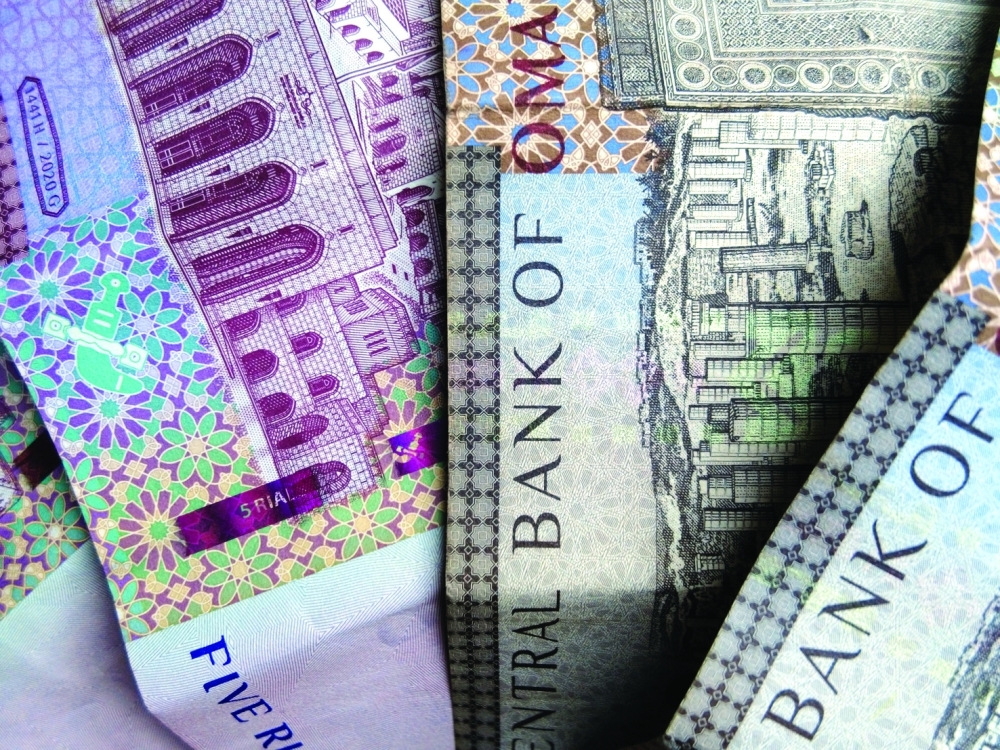





MUSCAT: Oman's banking sector is expected to remain resilient despite the ongoing conflict involving Iran, with the country's lenders benefiting from favourable economic conditions, strong capital buffers and stable funding, according to a new assessment by Fitch Ratings.
In a peer review of the country's banking sector, the ratings agency said the impact of the Iran war on Omani banks' operating environment is likely to be "fairly contained" in 2026, describing Oman as the Gulf state least exposed to the conflict because its exports do not depend on the Strait of Hormuz.
Fitch said higher oil prices, combined with the government's economic diversification programme under Oman Vision 2040, continue to support economic activity and create growth opportunities for lenders. The agency expects bank lending to expand by around 5 per cent this year, only marginally below its previous forecast of 6-7 per cent, with corporate borrowing linked to energy and infrastructure projects and continued retail demand underpinning credit growth. Lower interest rates are also expected to support borrowing activity.
The agency noted that the upgrade of Oman's sovereign rating to BBB- in December 2025 strengthened the operating environment for domestic banks, prompting upgrades across all Fitch-rated Omani lenders.
While geopolitical risks remain, Fitch said the sector's asset quality should continue its gradual recovery. The average impaired loan ratio stood at 4.2 per cent at the end of the first quarter of 2026, and the agency expects Stage 2 loans to decline further with only a limited migration into non-performing assets, although real estate and hospitality could face additional pressure if the regional conflict intensifies. Banks nevertheless remain exposed to concentration risk because of the relatively narrow domestic economy and sizeable single-borrower exposures.
Profitability is also expected to remain stable despite the uncertain geopolitical backdrop. Fitch said lower interest rates have had only a limited effect on net interest margins, while reasonable cost discipline should help offset any moderate increase in loan impairment charges resulting from the conflict. Average operating profit relative to risk-weighted assets remained steady at around 2 per cent during the first quarter of 2026.
Capitalisation and liquidity continue to underpin the sector's resilience. Fitch expects banks to maintain adequate capital buffers, with the average Common Equity Tier 1 ratio standing at 13 per cent at the end of March, comfortably above regulatory minimums. Customer deposits account for around 91 per cent of non-equity funding, supported by stable government and government-related entity deposits, although the agency cautioned that deposit concentration remains a structural risk.
Fitch also highlighted the strength of Oman's banking system from a policy perspective, noting that authorities have a high propensity to support the sector given its central role in financing the domestic economy. The government's improved fiscal position following the sovereign upgrade has further enhanced its capacity to provide support should conditions deteriorate.
Oman Observer is now on the WhatsApp channel. Click here